
 By
By 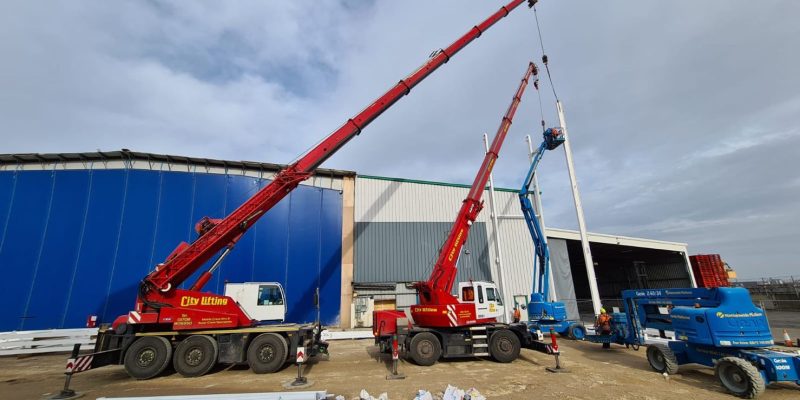
Executing a successful lifting operation requires balancing complex site logistics, heavy load dynamics, regulatory compliance, and workplace safety. Whether installing precast concrete panels, placing HVAC units on high-rise structures, or positioning heavy industrial plant machinery, site managers must determine how their crane hire service will be structured. Within the heavy machinery and construction sectors, lifting operations governed by national safety standards—specifically BS 7121 Parts 1 and 3 (the Code of Practice for Safe Use of Cranes)—generally fall under two primary frameworks: Construction Plant Hire Association (CPA) Crane Hire and a fully managed Contract Lift.
Understanding the division of responsibilities, legal liabilities, personnel requirements, and insurance obligations inherent in each approach is essential for selecting the right model for any construction or civil engineering project.
Deconstructing CPA Crane Hire: The Client-Managed Model
Under standard CPA Crane Hire Peterborough, the rental firm supplies a tested, certified, and fully maintained mobile crane along with a qualified, experienced operator. However, once the equipment arrives on-site and leaves the public highway, the legal and operational responsibility for managing the lift transfers entirely to the client.
In this setup, the customer acts as the primary controller of the lifting operation. The client must possess the internal engineering knowledge, certified staff, and commercial insurance coverage needed to conduct the operation in strict compliance with safety regulations. Key responsibilities assumed by the hirer under standard CPA conditions include:
- Appointing Competent Personnel: The client must provide a certified Appointed Person (AP) who takes full technical responsibility for planning the lift. This includes creating a detailed site-specific Risk Assessment and Method Statement (RAMS), calculating load weight, radius, and boom extension, and selecting the correct crane size.
- Site Supervision and Slings: The client must supply an accredited Crane Supervisor on-site to oversee the execution of the AP’s plan, alongside qualified Slinger/Signallers to securely attach loads and direct the crane operator.
- Ground Conditions: The hiring company must evaluate ground bearing capabilities, account for hidden services or underground voids, and specify suitable outrigger matting or spreader plates to prevent ground failure.
- Comprehensive Insurance: The customer is required to hold full insurance coverage, including cover for loss of or damage to the crane equipment, loss of hire revenue while the crane is under repair, injury or damage to third parties, and damage to the goods being lifted.
Standard CPA Hire provides maximum flexibility and cost efficiency for established main contractors, structural steel firms, or civil engineering teams that already maintain in-house lifting management personnel and existing insurance policies.
The Comprehensive Protection of a Fully Managed Contract Lift
For organizations that lack dedicated internal lifting engineers, or for project sites presenting complex spatial or environmental hazards, a Contract Lift offers a comprehensive, turnkey solution. When engaging a provider for a Contract Lift, the client completely outsources the legal liability, planning burdens, and execution risks of the lifting process to the specialist lifting company.
In a Contract Lift agreement, the service provider takes complete operational responsibility from concept to completion, adhering strictly to BS 7121 codes of practice. The specialist provider manages the operation by supplying:
- Engineering & Planning: An accredited Appointed Person visits the site, assesses environmental factors, measures load dimensions, checks ground conditions, and authors a fully compliant lift plan, complete with CAD drawings, rigging schedules, and detailed RAMS documentation.
- Qualified Personnel Teams: Beyond providing the crane operator, the contract lift package incorporates a certified Crane Supervisor, experienced Slinger/Signallers, and any necessary banksmen or rigging technicians.
- Certified Equipment & Tackle: The specialist furnishes the mobile crane alongside all required, fully tested lifting accessories—such as spreader beams, wire rope slings, web slings, shackles, and specialized outrigger support mats.
- Complete Liability & Insurance Coverage: Total liability transfers to the service provider. The package includes comprehensive insurance covering the crane machinery, the high-value load being handled, site damage, and third-party liabilities.
Evaluating Project Needs: Making the Right Choice
Choosing between standard CPA Hire and a Contract Lift hinges on an honest assessment of internal capacity, regulatory compliance capability, and risk management tolerance.
While standard CPA Hire carries a lower upfront hire charge, it exposes the client to significant operational liabilities and requires substantial administrative overhead to ensure full compliance with safety laws. A single error in load calculation or ground preparation can result in severe financial and legal repercussions.
Conversely, a Contract Lift provides total peace of mind by placing every aspect of the operation into the hands of experienced lifting professionals. By transferring liability and administrative duties to a dedicated specialist, project managers can safeguard site personnel, maintain strict construction timelines, and focus their internal resources on core building objectives.









Comments