
 By
By 
Modern bathroom design has shifted dramatically away from harsh, utilitarian overhead fixtures toward layered, architectural illumination. Among the most influential developments in recent years is the integration of light-emitting diodes directly into bathroom cabinetry. No longer treated as an afterthought or a simple functional necessity, lighting has become an integral design element that shapes the mood, enhances usability, and defines the luxury aesthetic of the space.
By embedding efficient diodes into vanities, medicine cabinets, and tall linen towers, designers can eliminate shadows and create a clean, minimalist environment. This integration changes how homeowners interact with their personal spaces on a daily basis, blending advanced technology with timeless interior architecture.
The Rise of Concealed and Architectural Illumination
The core philosophy guiding contemporary bathroom design centers on seeing the light effect rather than the physical fixture itself. Bulky vanity bars mounted haphazardly on walls are increasingly being replaced by seamless, flush integrations.
Cabinet manufacturers now engineer frames with built-in channels designed to house ultra-thin diode strips. These concealed setups produce a soft, indirect glow that highlights the natural textures of wood, stone, and tile without creating blinding glare. Whether tucked beneath a floating vanity base to generate a weightless, floating illusion or recessed into the shadow lines of cabinet doors, this technique adds profound depth and dimension to even the most compact bathrooms.
Functional Enhancements Inside the Cabinet
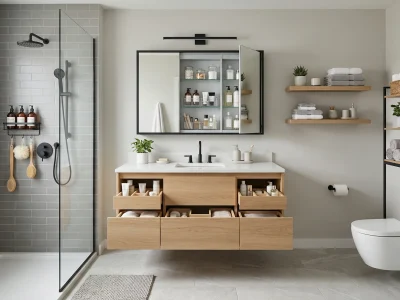
While exterior glow enhances the overall ambiance, interior cabinet illumination solves practical storage challenges. Opening a dark vanity or medicine cabinet to search for small items is a frustration of the past.
-
Drawer-Activated Sensors: Integrated micro-switches automatically illuminate drawer interiors the moment they are pulled open, making it effortless to find everyday grooming tools and cosmetics.
-
Vertical Strip Lighting: Lining the inner vertical frames of tall linen cabinets bathes every shelf in bright, even light, ensuring items at the back never get lost in shadow.
-
Dedicated Charging Bays: Built-in power drawers combine discreet task lighting with concealed outlets, keeping electric toothbrushes and razors powered up while keeping countertops completely free of cords.
Smart Technology and Human-Centric Controls
Lighting inside modern bathroom cabinetry is increasingly intelligent, adapting dynamically to the rhythms of daily life. Standard toggle switches are giving way to touchless motion sensors, touch-sensitive dimmers, and smart home automation.
Circadian lighting integration allows cabinetry systems to shift their color temperature throughout the day. Bright, crisp morning light helps energize the body during early routines, while a gradual transition to warm, amber tones in the evening promotes relaxation and winding down before sleep. These adjustments occur seamlessly via pre-set automation or voice commands, aligning home design with biological well-being.
Material Synergy and Clean Aesthetics
Integrating diodes directly into wood, metal, or glass cabinetry requires careful coordination of materials to ensure longevity and visual harmony. High-grade aluminum channels are typically embedded into the cabinet construction to act as heat sinks, extending the operational lifespan of the diodes while diffusing the light evenly through frosted acrylic covers.
The choice of finish matters immensely. Matte black frames, brushed brass channels, and minimalist handle-free push-to-open mechanisms complement the sleek nature of linear illumination. When the cabinet is closed, the hardware remains understated, allowing the clean lines and gentle wash of illumination to take center stage.
Frequently Asked Questions
Can integrated LED systems be retrofitted into existing bathroom cabinets?
Yes, many retrofit kits utilize surface-mounted or low-profile channel strips that can be adhered beneath existing wall-hung vanities or inside cabinet boxes, though wiring concealment may require minor drywall or electrical work.
What color temperature works best for illuminated bathroom vanities?
A color temperature between 3000K and 3500K is widely considered optimal for bathroom vanities because it provides clean, accurate illumination for grooming tasks while maintaining a warm and flattering ambiance.
Are integrated cabinet lights safe for high-moisture environments?
Professional installations rely on components with appropriate moisture-resistant ratings, such as IP44 or higher, ensuring that steam and water splashes from showers do not compromise electrical safety.
Do LED strips inside cabinets require a lot of energy?
Illumination systems use energy-efficient diodes that consume a fraction of the electricity required by traditional incandescent or halogen bulbs, resulting in very low operational costs over time.
How do motion sensors work inside dark vanity drawers?
Infrared or magnetic micro-switches are installed along the drawer glides, detecting movement or physical separation to automatically trigger the lights when opened and shut them off when closed.
What is color rendering index and why does it matter for makeup application?
Color Rendering Index measures how accurately a light source reveals true object colors compared to natural sunlight; high ratings ensure that foundation, lipstick, and skincare tones look identical indoors and outdoors.






Comments